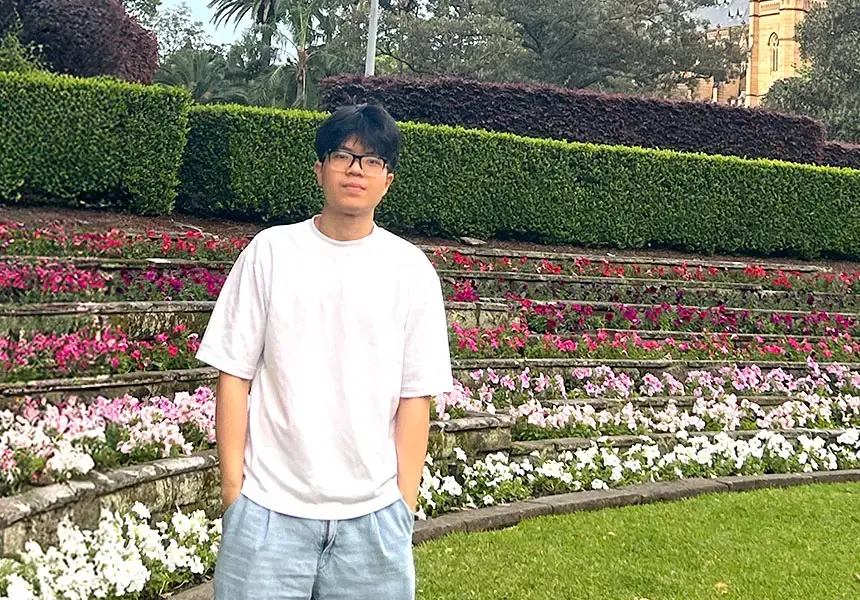
Wai Yan Myint Tun doesn’t check his email very often. Every now and then this can lead to confusion – like when we contacted him for an interview. We wanted to chat with him about his Outstanding Graduate award.
“I was so surprised. I didn’t know about the award because I hadn’t checked my email for a few months. I thought you’d emailed the wrong person or something,” he says.
But we weren’t mistaken. Wai had won a cash prize for achieving the highest grade-point average (GPA) for UTS Foundation Studies.
Swapping business for a new dream
Now studying Diploma of Engineering, Wai originally wanted to study business.
“I was still in high school when the conflict started in my country, Myanmar. I saw the destruction, and I realised I could contribute more as a civil engineer,” he says. “Now there’s been an earthquake, and my country needs infrastructure. I want to have an impact and so my dreams changed from business to engineering.”
Born in Mandalay, Wai grew up in Yangon, where he completed high school to Year 10. He then studied Foundation for Business as an online course from Singapore.
“That’s when I realised my country needs engineers. I wanted to study at UTS because I had cousins who had studied there. My education agent recommended UTS College, and they told me I’d need to do physics in UTS Foundation Studies,” he says.
The first thing he remembers about starting at the College was making new friends.
“Everyone’s so friendly,” he says, “especially in the Welcome Week. That’s when I made most of my friends, and even after they went off to uni and we’re not doing the same classes, we’re still in contact. These are the friends I made in my first week of College.”
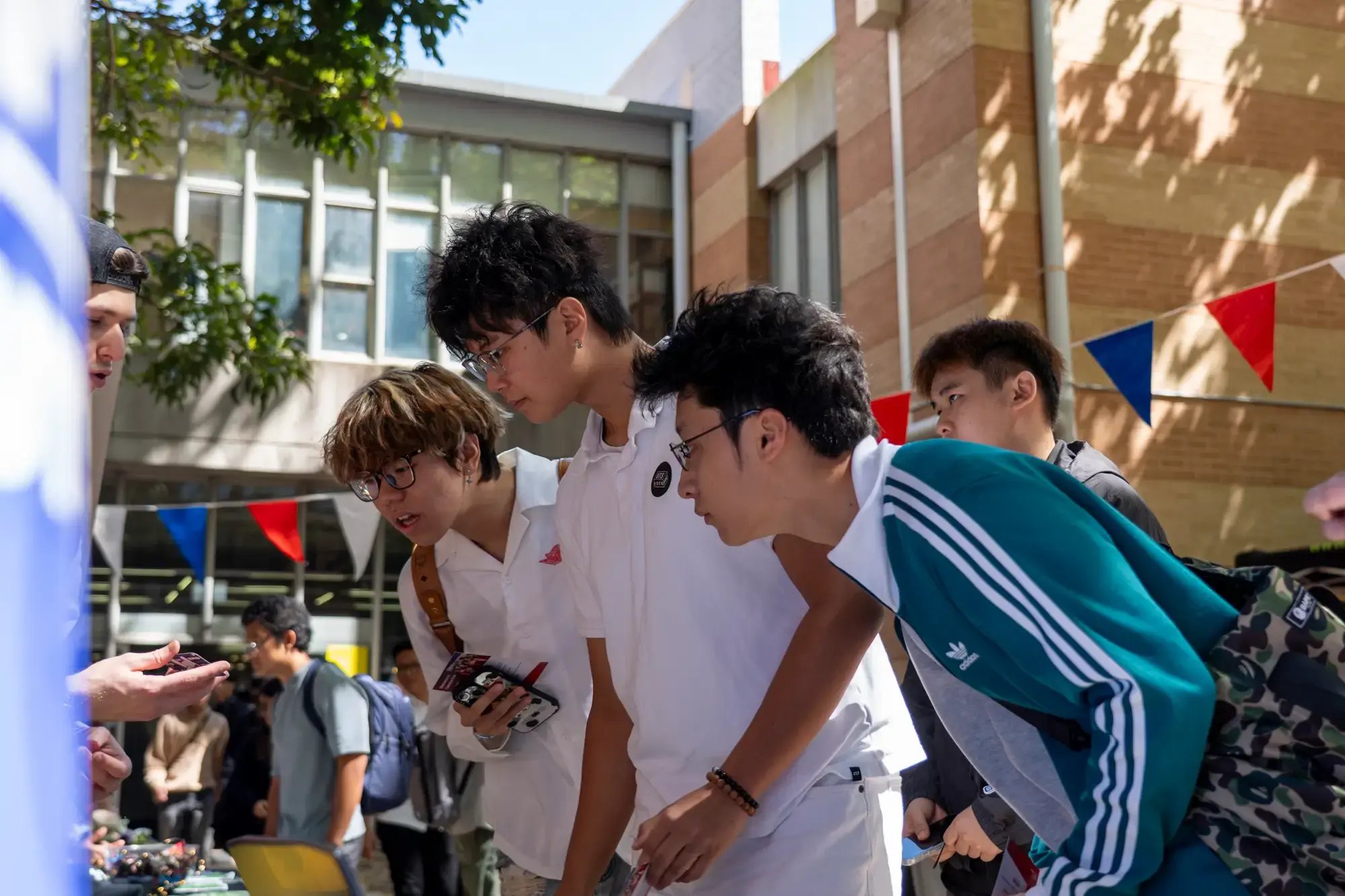
UTS College Events like Welcome Week helped Wai settle in and make lasting friendships
“I’ve made friends from many countries, but when I meet people from Myanmar it’s especially easy to connect. At UTS College, you meet friends from all over the world.”
A foundation beyond physics
Wai says UTS Foundation Studies set him up well for his Diploma of Engineering.
“The most important thing was physics. We use that all the time in engineering, so it’s the main thing I’m using. But another thing that helped me was to learn Excel. I wasn’t very familiar with it at the start and now it’s so useful.”
A less obvious subject, Creative Practice, proved surprisingly valuable. An elective usually taken by Design students, it explores how design works in various contexts (social, personal, economic, and technological). Students undertake a series of creative projects and engage in research at a variety of Sydney museums and galleries. The projects include reimagining an existing object and creating an object ‘from the future.’ Wai found it challenged him to think in new ways.
“I took it because it was something I’ve never done before. It allowed me to explore my creativity and discover things not directly related to my course. That was cool, because creativity is important in engineering,” he says.
The UTS College way of learning, Learning.Connected, also worked well for him. And Wai has some advice for new students.
“Make the most of the pre-tutorial videos,” he says. “When you get to around week five or six, you’ll see how important they are. It’s so much easier if you make time to do the pre-tutorial throughout the week.”
He also recommends keeping up some interests outside of study.
“I go out with my friends, and I like computer games – multiplayer games like Valorant. I’ve also been to a few Myanmar Students’ Association events, and I’m planning to get involved as a Student Ambassador or Peer Mentor if I can,” he says.
“I like reading too. Mostly about finance and some self-help books. I really liked Rich Dad, Poor Dad.”
Wai is looking forward to starting at UTS soon, and to everything that comes next.
“After I complete my degree, I want to gain some experience for a few years and then return to my country,” he says. “I want to work on infrastructure projects like bridges and maybe buildings. After last year’s earthquake and the ongoing unrest, it may take a long time to rebuild and I’m hoping I can make a small impact towards that.”