





The First Year Matters

A great university experience starts with a great first year. 

Hear from five students who found their path to UTS.  

Our story

We didn’t all leave school with the same plan. Some of us wanted a different way into UTS. Some needed time to build more confidence. Others were still working out what came next. What we shared was a desire to find the right start, not just the fastest one.

At UTS College, we found a place to learn, grow and prepare for the next stage of our journey. Looking back, there are a few things we wish we’d known when we were deciding what to do after Year 12. We hope our experiences help as you consider the options ahead.

Terez, Jacob, Isha, Rishi and Susie

First-year moments that mattered

When we look back on our first year, it’s not the timetables or assignments we remember most. It’s the people we met, the challenges we worked through, and the moments that helped us grow. 

IMG_6331
IMG_8279 2
Jacob-3
Jacob-4
IMG_0625 2 (1)
IMG_6331
IMG_8279 2
Jacob-3
Jacob-4
IMG_0625 2 (1)
IMG_6331
IMG_8279 2
Jacob-3
Jacob-4
IMG_0625 2 (1)
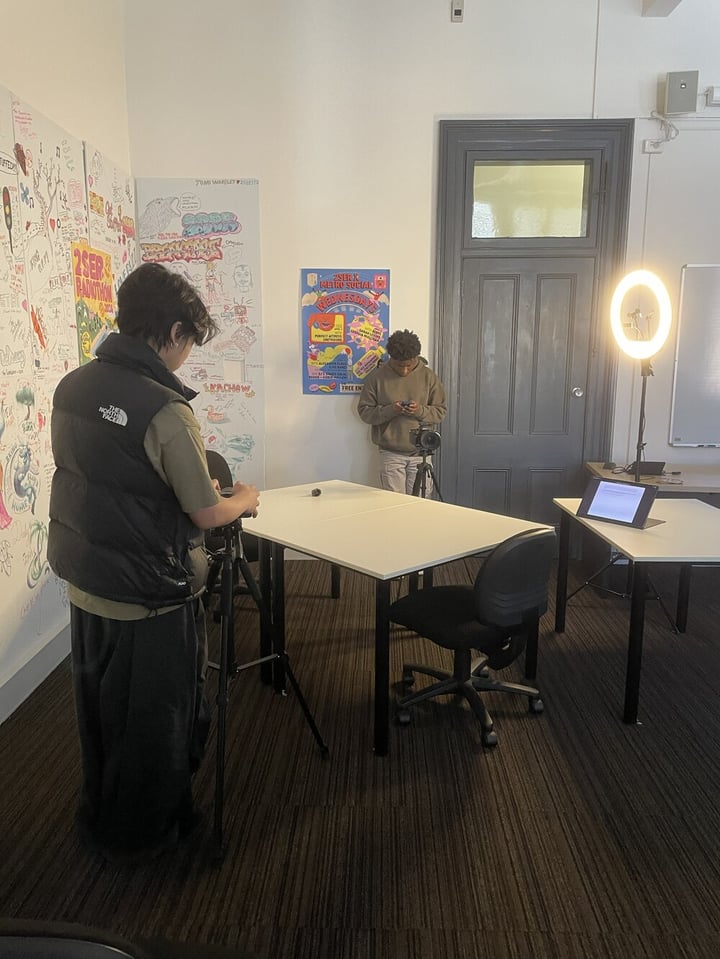
Setting up studio for an interview project
Our advice to parents

4507641992-DOM-PROFILE-Banners_0726-JACOB

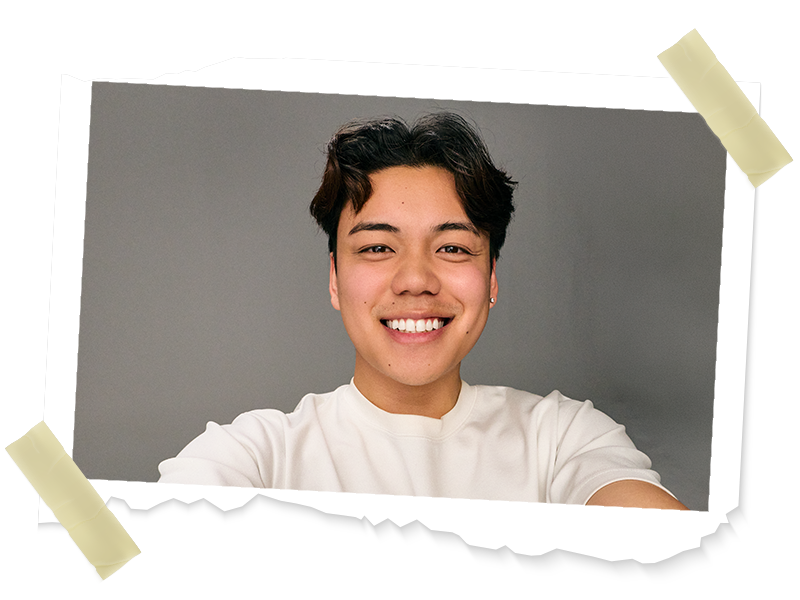
“Encourage your child to follow what interests them. When you’re motivated and passionate about what you’re studying, everything else becomes easier.”

- Jacob

 Our advice to parents 

University is not a race

University is not a race

It is okay to take a different path

Why UTS College worked for us

The pathway mattered. But so did everything that happened along the way.

A direct way to UTS

A direct way to UTS

Most diplomas lead to 2nd year UTS. Many of us liked knowing we could progress to UTS without adding extra years to our study journey. 

Our qualifications

Icons-2000x2000_Prep-Time

Over 35 years

Of our graduates successfully progress to UTS

Explore the diplomas

How it works

There is more than one route from Year 12 to  UTS. Complete an eligible UTS College diploma and meet the required academic criteria to progress to a related UTS bachelor’s degree. Recognition of prior learning and entry point vary by diploma and destination degree.

High school
year 12
Entry based on
ATAR
UTS degree year 1
Entry based on
HSC subject
average
UTS College diploma
UTS degree
year 2 and 3*

*For domestic students, you must successfully complete your diploma by achieving the required Grade Point Average (GPA) for entry to UTS. Most UTS College diplomas take you to second year of UTS, depending on the course you choose. See individual course pages for details.

Important: the Diploma of Design & Architecture articulates to the first year of UTS with 36 credit points. Upon progressing to UTS, this credit recognition can reduce the amount of study required to complete your UTS degree.

Snapshot

Course length Pathway Entry Fees

8 or 12 months

Progression to eligible UTS degrees; many diplomas lead to second year

  • 12-month diploma: 67% HSC subject average
  • 8-month diploma: 75% HSC subject average

Eligible domestic students may access FEE-HELP

Questions parents often ask

Terez

I always wanted to go to UTS, but I did not feel prepared or confident enough to go straight from high school.

Terez
Isha

 The location and pathway worked for me. I was also older and did not have enough recent study credits to go straight to university.

Isha
Susie

I wanted to complete a diploma first. It gave me another qualification and time to prove to myself that I could do it.

Susie
1 of 3Swipe to see more
Terez

I always wanted to go to UTS, but I did not feel prepared or confident enough to go straight from high school.

Terez
Isha

 The location and pathway worked for me. I was also older and did not have enough recent study credits to go straight to university.

Isha
Susie

I wanted to complete a diploma first. It gave me another qualification and time to prove to myself that I could do it.


Susie
1 of 3Swipe to see more

FAQs for parents

Have a question? We are here to help.

It's a question we hear often. 

UTS College provides diploma pathways that lead to related UTS degrees. Students complete university-level study before progressing to UTS, provided they meet progression requirements. 

For many families, it's not a choice between UTS and UTS College. It's about finding the right place to start. The destination can still be the same. 

The word diploma can mean different things depending on where you study.  

A UTS College diploma is a higher education qualification that forms part of a pathway into a related UTS bachelor’s degree. Students study university-level subjects and may receive credit towards their future degree. 

For many families, what's most important is understanding where a qualification can lead. That's why it's worth looking at progression pathways, credit arrangements and future study opportunities when comparing options. 

Many parents worry that studying a diploma means taking a longer route to university. 

In most cases, it doesn't. Most UTS College diplomas lead directly into the second year of a related UTS bachelor's degree. 

Most domestic diploma options are completed in 8 or 12 months, depending on the study program selected.
Students can access academic advisers, peer mentoring, study assistance and wellbeing services throughout their studies.  

Many students also value the smaller  learning environment and classes which make it easier to ask questions, connect with teachers and stay engaged in their studies. 
No. UTS College diplomas are not based on ATAR entry requirements. Instead, eligible school leavers are assessed using HSC subject averages relevant to their chosen course. Certificate IV (relevant to their chosen course) is also considered. 

There are many pathways into university. Depending on the course, UTS College assesses applications using HSC subject averages rather than an ATAR. Relevant qualifications, such as a Certificate IV, may also be considered.

A lot of students don't get the result they were hoping for, and that can feel overwhelming in the moment. 

UTS College gives students another way to work towards their goal. Rather than being defined by a single result, they can demonstrate their ability through university-level study and build the skills needed for the next stage of their journey. 

This is one of the most common concerns parents share with us. 

The reality is that an ATAR measures performance at a single point in time. It doesn't measure determination, growth, resilience or potential. 

Students who successfully complete a diploma have already demonstrated they can meet university-level academic expectations before progressing to UTS. Every year, students take this pathway and go on to succeed in their degree. 

It's a fair question, and one many families ask.

A diploma is more than a pathway into a degree. It's also a recognised qualification in its own right.

Many families tell us they value the combination of university-level study, and a smaller learning environment designed to help students transition into higher education with confidence.

Ultimately, the decision comes down to finding the option that's the right fit for your child, their goals and how they learn best. 
Yes. Eligible domestic students may be able to defer their tuition fees through FEE-HELP, subject to Australian Government eligibility requirements. 
They're similar. 

FEE-HELP is a government loan scheme that allows eligible students to defer their tuition fees. Like HECS-HELP, repayments are made through the tax system once income reaches the government repayment threshold. 

Many families find it helpful to learn about FEE-HELP early when comparing their study options.

A lot of students don't get the result they were hoping for, and that can feel overwhelming in the moment. 

UTS College gives students another way to work towards their goal. Rather than being defined by a single result, they can demonstrate their ability through university-level study and build the skills needed for the next stage of their journey. 

This is one of the most common concerns parents share with us. 

The reality is that an ATAR measures performance at a single point in time. It doesn't measure determination, growth, resilience or potential. 

Students who successfully complete a diploma have already demonstrated they can meet university-level academic expectations before progressing to UTS. Every year, students take this pathway and go on to succeed in their degree. 

Yes. Most UTS College diplomas provide you direct entry into second year of a related UTS bachelor’s degree.  

The exception is the Diploma of Design and Architecture, which provides 36 credit points towards a UTS degree (a full year of uni credit is 48 credit points). While this particular diploma doesn’t lead directly to second-year entry, it reduces the number of subjects you’ll need to complete once you progress to UTS.

Yes. Students who successfully complete an eligible diploma and meet progression requirements can continue into a related UTS bachelor's degree and study alongside other UTS students. 
By successfully completing the Diploma of Design and Architecture, and meet the required progression criteria, you will be eligible to enter the first year of a related UTS degree with 36 credit points of recognised prior learning. This credit recognition can reduce the amount of study required to complete your UTS degree.

Start your UTS story

Start your UTS story